Home › Common Problems › Granule Loss and Shingle Deterioration
Granule Loss and Shingle Deterioration
in Cincinnati, OH
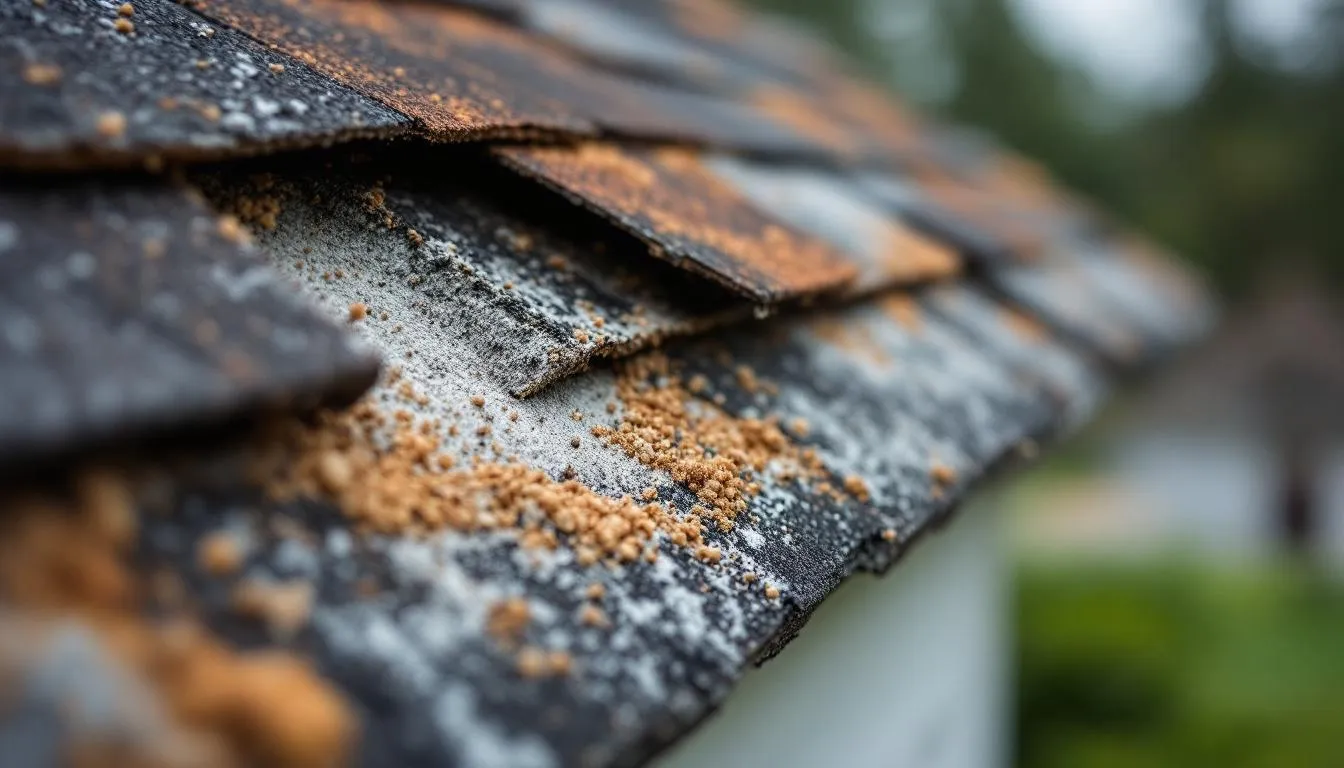
The ceramic granules on asphalt shingles are what protect the roof from UV rays and weather. Cincinnati's hot, humid summers and repeated freeze-thaw cycles each winter wear those granules loose over time. Once they wash into the gutters, the bare asphalt underneath starts to crack and age fast. A roof can be losing years of life with every rainstorm before you ever notice a problem from the ground.
Cincinnati Roof Repair Pros helps Cincinnati, OH homeowners fix granule loss and shingle deterioration — call for a free inspection.
Quick Answer
Those tiny gritty pieces on your shingles protect the roof from Cincinnati's sun and freeze-thaw cycles. When they wash away, bare asphalt cracks and ages quickly. A roofer checks how much life is left and replaces shingles that are too far gone. Call (513) 666-5386 if you see grit piling up in your gutters.
Telltale Signs
Warning Signs to Watch For
- Heavy accumulation of dark gritty granules in gutters and downspout discharge areas
- Shingle surfaces appearing lighter or patchy in color where granules have shed
- Visible bare asphalt or shiny black spots on shingle faces when viewed up close
- Shingles feeling rough and crumbly rather than firm and uniformly textured
- Increased granule runoff appearing in window wells or foundation drainage after rain
- Shingles beginning to curl at edges or crack in a web-like pattern
Root Causes
What Causes Granule Loss and Shingle Deterioration?
Natural Age and UV Exposure
The asphalt binder is the layer that glues granules to the shingle. Cincinnati summers bring long stretches of intense UV that slowly break that binder down, especially on south- and west-facing slopes. Once the binder weakens, granules shed with every rain and the bare asphalt underneath gets hard, cracks, and stops keeping water out.
The Fix
Full Roof Replacement
When granules wear off across the whole roof, the asphalt underneath is cooked and brittle. At that point, full replacement is the only fix that will keep water out.
Hail Impact Damage
Cincinnati gets hail-producing thunderstorms every spring and summer. Even dime- to quarter-sized hailstones can knock granules loose. Those bare spots are called impact craters. They age faster than the rest of the shingle and will eventually let water in.
The Fix
Insurance Claim Assessment and Shingle Replacement
A pro inspects the roof and documents every hail impact. That paperwork supports your insurance claim. Then the damaged shingles get replaced before the bare spots turn into active leaks.
Manufacturing Defect or Poor-Quality Material
Many Cincinnati roofs re-roofed in the 1990s and 2000s got shingles from bad production runs. The asphalt coat was too thin or the granules were not pressed in properly. Those shingles can start losing granules heavily within five to ten years, no matter what the weather does.
The Fix
Manufacturer Defect Claim and Targeted Replacement
First, the shingle brand and production period are checked to see if a defect program applies. Then the bad sections or the full roof are replaced with properly made shingles built for Cincinnati's climate.
Self-Diagnosis
Which Cause Applies to You?
Check the signs you're observing to narrow down the likely root cause before your inspection.
| What You're Seeing | Natural Age and UV Exposure | Hail Impact Damage | Manufacturing Defect or Poor-Quality Material |
|---|---|---|---|
| Granule loss concentrated in circular impact patterns spread across roof | |||
| Granule loss progressing uniformly across all slopes on a 20-plus-year-old roof | |||
| Heavy granule loss on a roof fewer than 10 years old with no storm history | |||
| Granules in gutters increase sharply after a specific storm event | |||
| Shingles cracking and curling alongside granule loss | |||
| Granule loss worse on south slope but roof is less than 15 years old |
Free Quote
Get a free quote in Cincinnati
No obligation — tell us what's going on and we'll text you back shortly.
Other Problems
Services That Fix This
Granule Loss and Shingle Deterioration Near You
Also Helpful