Home › Common Problems › Roof Flashing Leaks
Roof Flashing Leaks
in Cincinnati, OH
Flashing is thin metal installed wherever the roof meets a chimney, skywall, or valley. Cincinnati's temperature swings make that metal expand and contract over and over each year. Freeze-thaw cycles are especially hard on it. Left alone, a flashing leak quietly rots your framing and grows mold before you ever see a stain inside.
Cincinnati Roof Repair Pros helps Cincinnati, OH homeowners fix roof flashing leaks — call for a free inspection.
Quick Answer
Flashing is the metal strip around your chimney and valleys. Cincinnati's hot summers and freezing winters make it bend and crack over time. A roofer reseals or replaces that metal so water stops sneaking in. Call (513) 666-5386 if you see a stain near your chimney or smell something musty in your attic.
Telltale Signs
Warning Signs to Watch For
- Water stains on ceilings or walls directly adjacent to a chimney or dormer
- Rust streaks running down exterior masonry below metal flashing
- Visible gaps or lifted edges where flashing meets chimney mortar or siding
- Peeling paint or bubbling drywall on interior walls near roof penetrations
- Musty odor in rooms directly below attic areas near chimney or vents
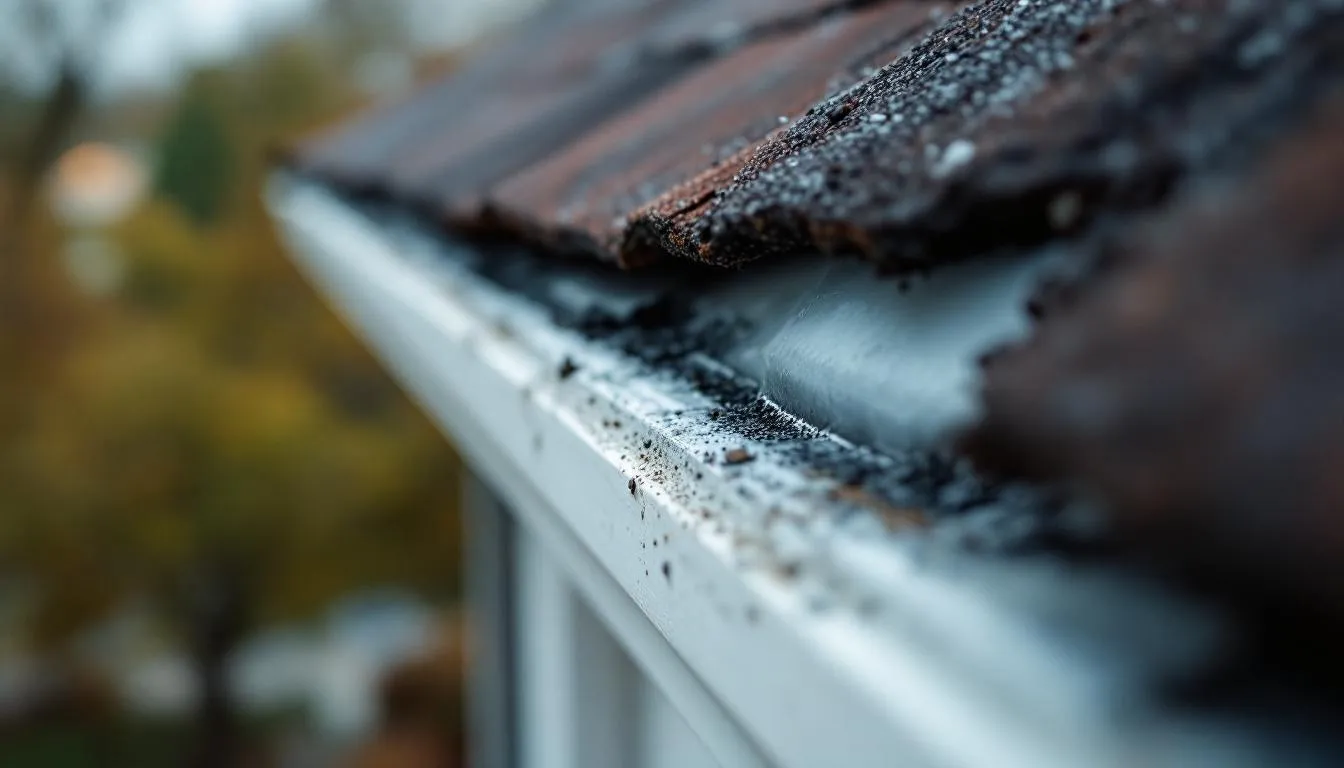
- Flashing visibly bent, buckled, or separated from the roof surface
Root Causes
What Causes Roof Flashing Leaks?
Freeze-Thaw Sealant Failure
Cincinnati averages around 15 to 20 freeze-thaw cycles every winter. Each cycle squeezes and stretches the sealant over flashing joints. After a few seasons, the sealant cracks and pulls away, leaving open gaps that send water straight into the roof with every rain.
The Fix
Flashing Resealing and Recaulking
The old sealant is fully stripped out and the joints are cleaned and primed. Then a polyurethane or rubberized sealant built to handle Cincinnati's temperature range is applied to create a flexible, watertight seal.
Chimney Mortar Deterioration
Many Cincinnati homes have brick chimneys built in the mid-20th century, and the mortar in those joints breaks down in wet winters. Step flashing is the metal that tucks between shingles and the chimney brick. When mortar crumbles, that flashing loses its anchor and water runs straight behind it into the roof deck.
The Fix
Tuckpointing and Flashing Replacement
The old mortar is ground out and replaced to give the flashing something solid to grip. Then the counter-flashing is set into freshly cut slots in the chimney brick to lock it in place and seal the gap at the roofline.
Original Flashing Material Corrosion
Older Cincinnati homes were often flashed with galvanized steel. That steel has a limited life and starts to rust once the zinc coating wears away. Once rust eats through the metal, no amount of sealant can fix it and the leak gets worse fast.
The Fix
Full Flashing Replacement with Copper or Aluminum
Corroded galvanized flashing is taken out completely. It is replaced with copper or aluminum flashing, which holds up far better in Cincinnati's humid climate and does not rust.
Self-Diagnosis
Which Cause Applies to You?
Check the signs you're observing to narrow down the likely root cause before your inspection.
| What You're Seeing | Freeze-Thaw Sealant Failure | Chimney Mortar Deterioration | Original Flashing Material Corrosion |
|---|---|---|---|
| Leak appears only during heavy rain with wind-driven precipitation | |||
| Visible rust staining on exterior masonry below flashing line | |||
| Mortar chunks found on roof surface near chimney base | |||
| Flashing intact but sealant visibly cracked and pulling away | |||
| Flashing has visible holes or perforations along its surface | |||
| Counter-flashing loose and rocking when touched by hand |
Free Quote
Get a free quote in Cincinnati
No obligation — tell us what's going on and we'll text you back shortly.
Other Problems
Services That Fix This
Roof Flashing Leaks Near You
Also Helpful